Monday, April 6, 2020

Diffusion of Innovations

When Snapchat was invented, there are a number of reasons why it spread so quickly. In my opinion, Snapchat is the most-used platform of social media today. Every teenager has it, adults have it, and even kids in middle school have it. It is a way to communicate with people that involves sending "Snaps" (pictures) to whoever you want to. You can also post to your "Snapchat Story" which anyone on your friends' list can view for 24 hours.

Picture Retrieved From: Snap Kit

I believe that it spread so quickly because it is an easy way to communicate. I also think that because there are so many fun "filters" which can be applied to someone's face or their surroundings, this draws people in even more. Another thing which can be seen as a positive is that you can see where your friends are at on the "Snapmap". You can see when they were last on their phone and where they were. This makes it a lot easier to figure out what your friends are up to without having to ask. Even though that sounds creepy, it is helpful for me personally when I'm wondering if my sister is at work or not. All I have to do is check Snapmaps and I could see that she's at work or at her friend's house.

Another positive to Snapchat is that you can personalize who gets to see what you post. For example, if I don't want my mother seeing something I post on a Saturday night, I will probably block her from seeing my story ahead of time to avoid an argument.


There are, however, many downsides to Snapchat. Someone who is too young might not be careful enough who they add to their friends' list. Not to mention, they might not make their location private. If a young girl adds a random person to her friends' list and her location is on, that person can see exactly where she is. This can be very dangerous to kids who aren't mature enough to have this app yet. 


Picture Retrieved From: The Conversation

-


Another down side is that it creates unrealistic images of people. For example, although some view the "filters" as a positive, it could also be considered a negative. Someone could look a certain way on Snapchat with a filter on, then look like completely different in person.

Wednesday, March 25, 2020

Tolerance


Values of Free Expression


The value that I chose was Promoting Tolerance. The reason I chose this was because I recently read a book on the story of Matthew Shepard. He was a college student who was brutally beaten, tortured and left to die in a small town called Laramie. This took place in 1998. A big takeaway from the story was “Live and let live,” which was a motto of the town which wasn’t really followed until this incident happened. 


Matthew Shepard (Pictured Above)
Picture Retrieved From: NPR


I think that there is a huge difference between tolerating and accepting. For example, not everybody can accept gay people. Accepting is coming to terms with who someone is and what they believe in or love. The understanding of someone’s identity is acceptance. That is their opinion, and they get to choose what to believe. However, tolerance is a great policy. A tolerant society is not only a “better” society, but is less violent, more peaceful, and overall a better atmosphere and environment to be in. Tolerance is one’s ability to come to terms with the existence of the person, rather than the person’s identity or beliefs. It is unreasonable to demand that everybody be accepting of others. Although that is a sad reality, it is unfortunately the harsh truth. The ability to simply tolerate someone or something takes no effort and makes a huge difference.

This policy brings peace, saves lives and makes the world a better place. If someone were to decide to adopt this policy into their society, they could watch the hate crimes decrease. They could watch the threats decrease. This leads to an environment and atmosphere where people do not feel like they have to be friends with everyone, but they feel safe and able to express themselves. These people can feel free to be who they are, which is the type of world everyone should want to live in. 


 Picture Retrieved From: Arab News


Is our society tolerant? In some ways, I do believe that our society is starting to tolerate a lot more than we used to. However, this is not always the case. Last summer, my mom walked into my room and told me that someone I knew very well was arrested. A gay man in his twenties was going out to the bar in South Carolina with some friends. When some people found out he was gay, they spiked his drink with drugs. However, these weren’t “date rape” drugs of any kind. These drugs made him break into an attorney’s office and trash the place. Keep in mind, this man is one of the kindest, sweetest, most innocent people I have ever met, and he has the biggest heart. He would never do anything to hurt anyone on purpose. But he was arrested for on accounts for many things which the drugs made him do. He spent a few nights in jail, before my mom drove thirteen hours to bail him out. This is a perfect example of not being tolerant. This man was doing absolutely nothing wrong. He was simply unwinding, having a good time with his friends in the bar after a long week of work. Someone who was simply not tolerant of gay people decided to take everything away from him. He lost his job, a lot of money and his sanity for a little while. 


Picture Retrieved From: Ed Modo


Our society is tolerant, when they want to be tolerant. That is not the kind of society I want to live in.


Information From:

Matthew Shepard Foundation and Wikipedia

Tuesday, March 3, 2020

Google, iPhones and Drones


I thought this group's presentation was interesting because they talked about Google, iPhones and drones. All of these things are relatively new and change the way we communicate.

Google was founded at Stanford University, which isn't necessarily surprising. It was created by two men named Larry Page and Sergey Brin who actually met when Page was touring Stanford for grad school. It is interesting to think about the moment they met because they had no idea what would become of the idea of a search engine. 70% of people in the world use Google via YouTube, Gmail, Google Chrome, etc. I expected this number to be a little bit higher but taking into consideration the people who didn't grow up around this social media, that number makes sense.

Picture Retrieved From: The Verge


The first iPhone was brought around in 2004. This was Steve Jobs's "Project Purple". In 2007, the first iPhone was released. The first weekend of sales, over 270,000 copies were sold. IPhones changed the way we communicate and browse. It is crazy to think that the idea of not having iPhones today stresses a lot of people out. We can't imagine life without it. This is a major setback of Iphones. They cause dependency on technology for memory, communication, etc. Sometimes people even lose social communication skills because they are so dependent on their phone to communicate.

Picture Retrieved From: I Got Offer


Drones are a newer technology. They are used for military, cinematography, firefighting and journalism purposes. The group said that drones are used for "communication purposes" which I thought was interesting but also true. Drones allow reporters to get more of a "bird's eye view" for bigger, more dangerous scenes. However, it does cause hazard to civilians' property, and has the potential to be hacked and used for malicious purposes.


Picture Retrieved From: Asian Review


Tuesday, February 25, 2020

I thought Group One's presentation was interesting. I never really thought about the fact that there was a time when Instagram or Twitter wasn't a thing. Instagram began in San Francisco in 2011 and was founded by Kevin Systrom and Mike Krieger. Instagram became the second-most free downloaded app, which really stood out to me. A positive effect of Instagram is that it allows connections to be made and kept throughout the years. A negative effect is that Instagram takes a toll on young women's self esteem and confidence a lot. Social media, especially Instagram feeds, have shaped young women into thinking they need to look like the models they see online, even if the picture is not real.


Picture retrieved from: Twitter


Twitter was designed by Noah Glass and Jack Dorsey came up with the idea. On March 21st, 2006, "I'm setting up my Twitter," was the first tweet ever. Today, there are over 330 million users, bringing in $1.01 billion in revenue. Twitter also has a major impact on the world today. Twitter is a social media platform which allows users to speak their opinions, while their followers like their Tweet, agree with it or disagree with it.


Picture retrieved from: The App Store


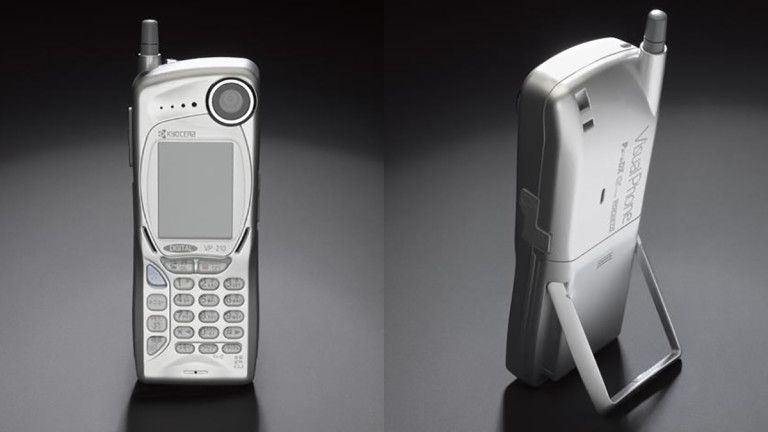
Another topic that interested me was the first camera phone. It was called a Kyocera Visual Phone (J-SH04)The first camera phone could only take 20 photos. Our phones today can hold thousands and thousands of pictures and videos.


Picture retrieved from: Android Authority 


In 1927, the first TV was invented. It was a primary source of entertainment during this time. After the war, 1% oh households owned a TV, but by 1952, one in every three households owned a TV. Today, there are many sources of entertainment, but back then, TV was the only one.


Picture Retrieved from: When Guide


Group 1 also talked about Cable TV and the first email as topics, which were also very interesting. 


Tuesday, February 18, 2020


The postal service started back in 400 BC. It was first used in Egypt, as Pharaohs used couriers to send out orders throughout the state. Paper envelopes were developed in China in 2nd Century BCE, allowing for letters and money to be kept in. Considering that the first envelopes were made out of cloth, animal skins or vegetable parts, this was a huge step. 


Picture retrieved from: Hip Stamp


In 1653, Frenchman Jean-Jacques Renouard de Villayer established a postal system in Paris. Not only did he set up mailboxes, but he delivered letters to those who used the envelopes that he sold. However, his business did not last long because his customers were scared away when someone put live mice in the mailboxes.
In 1837, the adhesive postage stamp was invented by Rowland Hill. Because of this, England gained their first postage stamp system in 1840. Hill also created the first uniform postage rates based on weight rather than size. This was very impactful because it made the prepayment for postage possible.

The United States Postal Service started in 1775. Benjamin Franklin, a founding father, was the first postmaster general. Aaron Montgomery created the first mail order catalog in 1872. This was impactful because it made it possibly for farmers who had troubles getting to the big city for commerce, buy goods. 

 Picture retrieved from: New York Times

In 1957, Maurice Levy invented the first automatic postal sorter. This could handle 200,000 letters an hour. This was super important because it was able to keep all the mail organized and was more efficient as well as timesaving.

For many reasons, the postal service altogether has been so impactful. The Universal Postal Union includes members from 192 countries. This allows people to give and receive information about important things that used to take much longer to get to them. The overseas postal system and horses were used to give and receive messages about war, etc. This was extremely important because that information needs to get to the people somehow. Communication needed to happen somehow. 

Over the past few years, newspapers, magazines, etc. give us information on what is happening in the world around us. It is crucial to understand what is going on around us and stay informed on the world’s news. 

However, the postal system is not as impactful today as it was years ago. Social media plays a huge part in the decline of the postal system. In 2009 alone, there was a 13% drop in mail volume. The cause of this is undoubtedly the internet. Instead of sending a letter to someone, you can give them a phone call or send them a text message. Regarding giving or receiving information, it can all be found online.
Overall, the postal system has been huge for the world over the years. Although it is not as relevant today because of technological improvements, it is still used and is the root of information and message giving or receiving. 

The postal service started back in 400 BC. It was first used in Egypt, as Pharaohs used couriers to send out orders throughout the state. Paper envelopes were developed in China in 2nd Century BCE, allowing for letters and money to be kept in. Considering that the first envelopes were made out of cloth, animal skins or vegetable parts, this was a huge step.

In 1653, Frenchman Jean-Jacques Renouard de Villayer established a postal system in Paris. Not only did he set up mailboxes, but he delivered letters to those who used the envelopes that he sold. However, his business did not last long because his customers were scared away when someone put live mice in the mailboxes.

In 1837, the adhesive postage stamp was invented by Rowland Hill. Because of this, England gained their first postage stamp system in 1840. Hill also created the first uniform postage rates based on weight rather than size. This was very impactful because it made the prepayment for postage possible. 

Picture Retrieved from Amazon.


The United States Postal Service started in 1775. Benjamin Franklin, a founding father, was the first postmaster general. Aaron Montgomery created the first mail order catalog in 1872. This was impactful because it made it possibly for farmers who had troubles getting to the big city for commerce, buy goods. 

In 1957, Maurice Levy invented the first automatic postal sorter. This could handle 200,000 letters an hour. This was super important because it was able to keep all the mail organized and was more efficient as well as timesaving.

For many reasons, the postal service altogether has been so impactful. The Universal Postal Union includes members from 192 countries. This allows people to give and receive information about important things that used to take much longer to get to them. The overseas postal system and horses were used to give and receive messages about war, etc. This was extremely important because that information needs to get to the people somehow. Communication needed to happen somehow. 

Over the past few years, newspapers, magazines, etc. give us information on what is happening in the world around us. It is crucial to understand what is going on around us and stay informed on the world’s news. 

However, the postal system is not as impactful today as it was years ago. Social media plays a huge part in the decline of the postal system. In 2009 alone, there was a 13% drop in mail volume. The cause of this is undoubtedly the internet. Instead of sending a letter to someone, you can give them a phone call or send them a text message. Regarding giving or receiving information, it can all be found online. 


Picture Retrieved from Social Media


Overall, the postal system has been huge for the world over the years. Although it is not as relevant today because of technological improvements, it is still used and is the root of information and message giving or receiving. 


Where I got my information from:


Tuesday, February 11, 2020

When a fight between an 18-year-old and a 17-year-old broke out in a high school cafeteria, the news spread like wildfire throughout the school. After a teacher was involved, resulting in a head wound, both students were charged with assault. A short story was posted on their website the next day. Before the journalist posted the story, he was told he was not allowed to use the name of the 17-year-old in the story because he was a minor. The journalist then contacted SPLC (Student Press Law Center) for more guidance on what to do.

In 1979, the U.S. Supreme Court ruled that the First Amendment protects journalists who use the names of minors in "newsworthy" stories as long as what they are publishing is truthful and lawfully obtained. Other courts have ruled that the First Amendment protects journalists who use the names of minors in articles in circumstances like these:

A minor is charged with unauthorized use of a motor vehicle and hit-and-run driving, the name of a 7-year old boy who was brutally beaten, the name of a high school student viciously attacked by his classmates at school, the name and photograph of a 12-year-old who was charged with the attempted murder of a police officer as well as many more so-called "newsworthy" stories like these.


Picture retrieved from:  The Punniest Newspaper Headlines of 2019


In my opinion, I feel like this comes down to morals. As a minor, your parents make most of your decisions for you. For example, if a minor is involved in a beating and the parents of that minor do not want their name published for personal reasons, I feel as though their wish should be honored. As an adult, many things change. You become capable of making many life-changing decisions, but you can also be arrested and go to jail.Your parents are no longer responsible for you. In cases involving adults, I feel like their name should be able to be used in articles without permission.

I also feel as though it is not morally correct to release the name of a twelve-year-old who was charged with attempted murder, without the permission from the parents. To me, it doesn't matter how "newsworthy" or terrible the crime is. This is a child. Journalists should be able to accept and honor the parents' wishes.


Picture retrieved from:  Bill on children’s rights to be brought before Majlis: MP


Article:                     Naming names: Identifying minors

Tuesday, February 4, 2020

Workers in California are being told that they aren't allowed to speak to reporters when asked to. Instead, they are supposed to refer them to a supervisor. However, the question is now being asked, "Does this violate their First Amendment right of Freedom of Expression?" The answer is simple: absolutely. By denying these employees to speak to reporters, they are taking away their right to express themselves. For example, if something was going on in the company, these employees may want to be honest to the public about it. They are not as worried about covering things up to make the company look better. However, the supervisors may be looking to twist things a little bit to make them not seem as bad. They don't want their employees saying anything about the company that may hurt them, although what they say might be truthful.
The California Department of Tax and Fee Administration is located at 450 N St. in Sacramento.
The California Department of Tax and Fee Administration, located at 450 N St. in Sacramento. AP file photo, 2014
Picture retrieved from https://www.sacbee.com/news/politics-government/the-state-worker/article238958093.html

 Simply by accepting these government jobs, it is not right (or constitutional) in any way for these employees to be giving up their American rights. Not only are these restrictions unconstitutional, they may be problematic. For example, let's say an employee was to speak up about a maintenance problem at their workplace that their supervisor did not want the media to know about and the supervisor punishes the employee by firing them. This brings up many other issues, which the company should be punished for, not the employee.
Although in some cases, it may make more sense for a supervisor to speak about something. If reporters are asking questions about something that the supervisor has more access to information about, it may make more sense for the supervisor to speak on it. However, this does not mean that the right for the employee to speak on it should be revoked. They should have the choice, as an American, whether or not they want to express themselves.

Picture retrieved from Why Freedom of Expression Still Matters


Article Link:

Gag clauses for California state workers, public employees might violate First Amendment rights


Read more here: https://www.sacbee.com/news/politics-government/the-state-worker/article238958093.html#storylink=cpy